Path Partner
Tackling Biking Hesitation
OVERVIEW
The Challenge
The goal of this project is to make Downtown Torontonians feel safe enough to cycle for trips within 5km rather than use transportation options with emissions.
These actionable steps will help pave the way into transforming Toronto into a bike city. This aligns with TransformTo's goals of 75% of trips under 5km will be biked or walked by 2050, and their overalls goals of reducing emissions.
In addition to lower emissions, Toronto will also be fostering a population of healthier people as theybenefit physically and mentally from biking and getting outdoors.
Duration
1 month
Tools
Figma, Miro, Canva, Adobe XD, Illustrator, Photoshop
Client
TransformTO and Humber
Role
UX/UI Researcher and Designer


SUMMARY
This research project is a collaboration with Transform TO, aimed to tackle the sustainability/climate change initiatives set forth by the city. A long term goal highlighted in the report states that they hope to have 75% of people walking or biking by 2050. Motivated by an environmental PESTEL trend, this project focuses on biking, and specifically, user behaviours tackling the resistance to biking due to safety concerns.
OBJECTIVE
Explore the attitudes toward bike safety in Toronto
- What makes interested cyclists feel safe
-
What does not make interested cyclists feel safe
What would make downtown Torontonians feel safe enough to ride their bike for short trips (less than 5km)?
EXISTING KNOWLEDGE
The popularity of bike cities are growing around the world such as Amsterdam, Copenhagen, Paris, and Portland. I looked at multiple academic articles and reports about bike cities, particularly safety concerns. This draws attention to how the City of Toronto should prioritize conducting safety reviews. It includes a comprehensive action plan to address cycling safety issues based on a combination of engineering, education, and enforcement measures.
Findings indicated key issues being :
1- Doorings the most frequent type of reported cycling collision in the City approximately 15.2%.
2- Conflict Zones. Such as driveways, parking lots and alleyways accounted for approximately 10.7%.
3- Right Hooks. Collisions affecting right turning vehicles, also known as ‘right hooks’, accounted for approximately 12.6%.
4- Left Crosses. Collisions affecting left turning vehicles at intersections, resulting in a reported cycling collision (14.9%).
5- Sidewalk Cycling. Approximately 6%.
6- Two Way Stops. Collisions at two-way stops including all motor vehicle turning movements accounted for approximately 13%.
7-Non-Motor Vehicle Collisions. It includes non-motor vehicle injury crashes between bicycle users and pedestrians, road infrastructure, and debris.
8- High Collision Corridors. Several corridors throughout the City were identified that had a high density (collisions/km) of reported cycling collisions.
9- Adverse Weather and Low Light.
Additionally, I found an interesting article via Goodordering that highlighted survey results posed to bikers on "Top Reasons Why People Don't Ride Bikes" which sparked the problem space focus to further explore perceptions of road safety.

Survey results top reasons why people DON'T ride bicycles more Via Goodordering


Primary Research
The primary method of data collection was via a diary study for the kind of qualitative data that was needed. A total of 6 participants were involved in this diary study to gain various touch points, pain points and general emotions regarding biking comfortability.
Diary Study Questions Examples:
-
Purpose of trip (When, destination, reason for trip)
-
Is there anything that was making you feel nervous/anxious about your trip? If so, why?
-
What made you feel safe during your bike trip and why?
-
What made you feel unsafe during you bike trip and why? What did you do about it?
-
What did you see/feel during your biking experience?
The findings from the diary study were used to create an empathy map.
Empathy Mapping

Secondary Research
On researching existing data I found that majority of bicycle injuries do not involve motor vehicles. Most are falls, collisions with stationary objects, and collisions with other bikes or pedestrians, which result from the bicyclist losing control, and most occur less than five blocks from home, in familiar surroundings.
But the most serious incidents involve motor vehicles.
Seven Routes to Bicycle Safety
-
Protecting head, being ready to ride, staying alert etc.
-
Technical controls of the bike before riding: Screwing the brakes, bike lights, saddle
-
Weather: if sunny have sunglasses
-
Size of the helmet and gloves are important
-
Ride on the right
-
Riding in a group, be more cautious
-
Use signals
-
To Avoid collisions: slow down, grab drivers attention, install a headlight, ride with the flow of the traffic etc.
-
Don't wear a headset while riding bike
-
Be extra cautious at intersections
-
Watch for hazards such as glass, rocks etc.
-
Be aware of doors that could open suddenly
-
Keep at least one hand on the handlebars
-
Don't wear a hat under the helmet
-
Check the bike size if it fits to your child
-
Signal turns
Bike attitudes for kids in Canada
-
No playing on the road
-
No riding on busy streets
-
No riding at night
-
Stop for all stop signs
-
Ride on the right with traffic
Here is the break down of the bike paths from easier to harder in Toronto:
1. Protected Bike Lanes
Protected bike lanes are physically-separated lanes for bicycles that run next to motorized vehicle traffic. These are the safest on-street places to ride in the city. The physical protection makes it difficult for vehicles to enter the bike lane and in some cases, the protection is good enough to stop out of control vehicles. Protected bike lanes are increasingly common in Toronto.
There are many different types of protection used in Toronto ranging from low concrete walls to flexi-posts. They are often used in conjunction with each other.
Low concrete wall - Anchored to the pavement. Highest level of protection. Many are decoratively painted.
concrete curb and flexi-post - Anchored to the pavement. curbs prevent most drivers from entering the lane
Decorative barriers - These vary in appearance and design barriers of flower beds and decorative sturdy art pieces have been used to divide the bike and car lanes throughout the city
Flexi-posts - Plastic, typically reflective, posts anchored to the pavement. Designed to spring back into place when struck and create bright division between bike and car lanes
2. Painted Bike Lanes
Contra-flow bike lanes
A painted bike lane is the most common type of cycling infrastructure in Toronto, and is indicated by the bike symbol and a solid white line. The solid white line tells motorists that they can't cross it and gives cyclists dedicated space on the road. A dashed white line indicates where a vehicle might have to enter the bike lane to make a right or left turn at an intersection.
Buffered bike lane - Provides additional space between car traffic and the bike lane. Indicated by double white lines with hash marks. Parking is shown to the right of the bike lane.
Traditional bike lane - A single white line defines the boundary of the bike lane.
Contra-flow bike lanes - Contra-flow bike lanes work the same way as normal painted bike lanes and are often found on quiet residential streets. The main difference is that they are indicated by a solid yellow line and run in the opposite direction of car traffic. They help people on bikes navigate one-way streets by making them bi-directional.
3.Multi-Use Path/Trail
There are lots of trails and off-road paths in Toronto, and they are a great way to explore and integrate natural beauty into your routes. They are scenic, quiet, safe, and easy for beginner cyclists. Many offer great views of the lake, the Don River, the Humber River, and can be a quick break from the busy city.
4. Streets w/o cycling infrastructure
It’s legal to ride your bike on almost every road in Toronto. Many people choose to keep their rides on quiet residential streets to avoid high traffic areas, but this is entirely up to you. Sticking to quiet streets is possible in some neighbourhoods, but there are real barriers such as Toronto’s highways and many popular destinations are on wide, fast streets. Your level of comfort, speed limit, actual driving speed, width of the road and more should go into your decision to ride with car traffic.
Sharrows/Gutters
Sharrows are a bike symbol painted on the road with two forward-pointing chevrons. They serve as a wayfinding measure for people on bikes and legitimize the presence of bicycles on the road.
PROGRESS MAKING FORCES

MOODBOARD
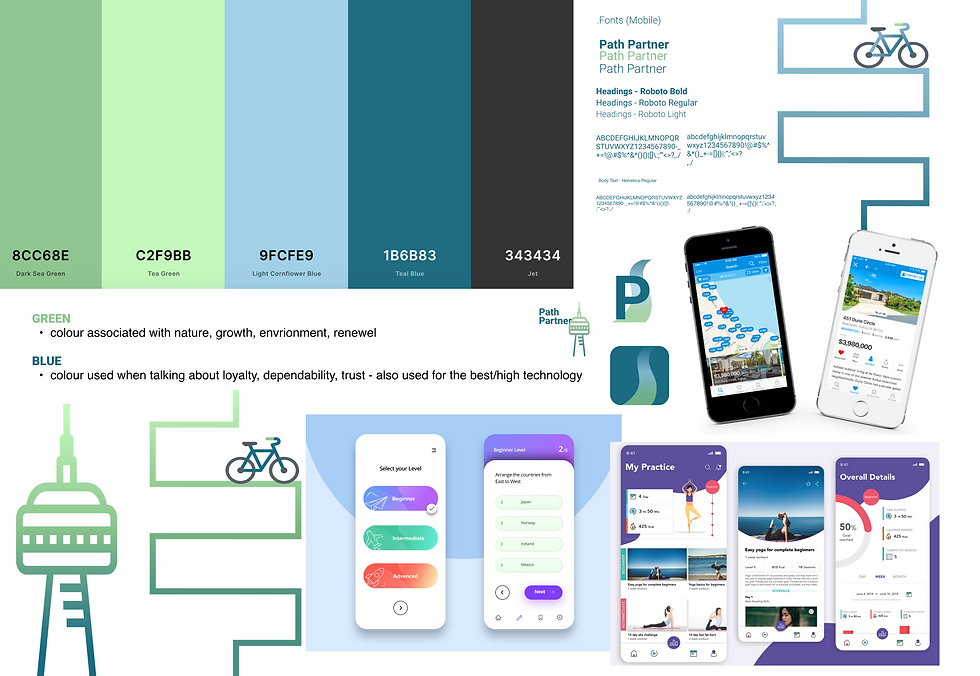
SKETCHES


WIREFRAMES


